
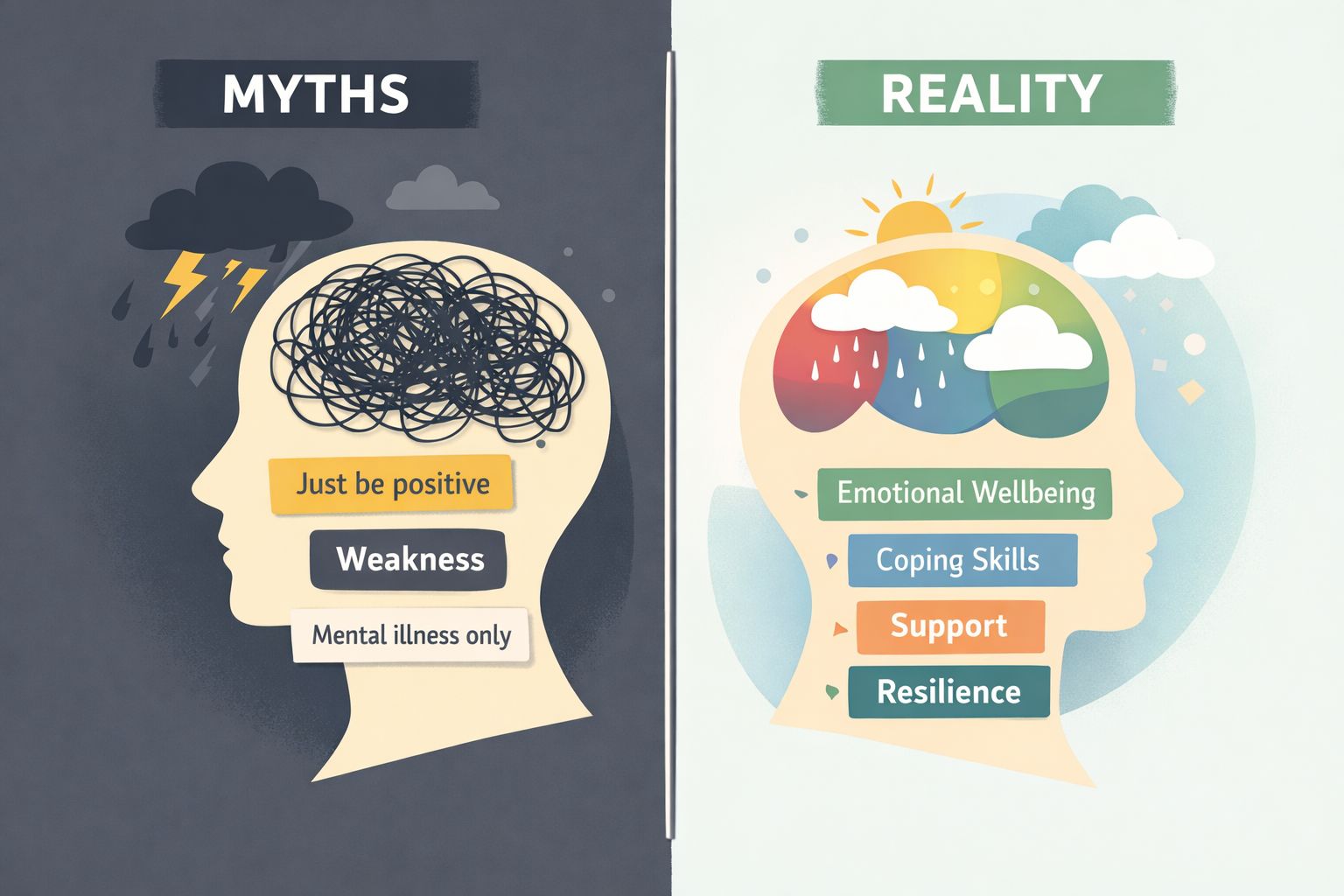
Mental health is something we all have, it consists of an individuals emotional, psychological and social wellbeing. It influences how a person thinks, behaves, feels, copes with stress, relates to other people around them and the decisions they make through out their life. By this standard it is as important and valuable as physical health yet it is misunderstood and taboo to discuss. Any struggles with mental health are often brushed under the rug or hidden, seen as a sign of weakness
But the simple truth is, mental health affects everyone and everything in our lives.
Good mental health does not refer to a feeling of unrelenting happiness or calm. Stress, sadness, frustration and loss are all natural and necessary part of natural human functioning. Good mental health refers to the capacity to cope with life’s difficulties and discomfort, manage them and recover from difficult experiences.
Mental health exists not as statis but a continuum. An individual can experience mental health difficulties and ease at different points in life. Sometimes balanced and resilient other times overwhelmed with anxiety and exhaustion, these shifts are not sign of weakness but conditions of the human experience.
What mental health is not
- Mental health struggles are not a sign of weakness or failure.
- It is not something that affects fragile or unstable people.
- It is not the same thing as mental illness.
- It is not a permanent or unchangeable part of functioning.
- It is not only relevant when it concerns serious illnesses like schizophrenia
Who can struggle with mental health?
Everyone has the potential to face struggles with their mental health at varying points in their lives.
Children may struggle due to neglect, inconsistent caregiving, bullying, or academic pressure.
Adolescents often face emotional challenges linked to identity development, peer pressure, body image, and expectations from family or society.
Adults may experience mental health difficulties due to work stress, unemployment, financial strain, relationship issues, trauma, or caregiving responsibilities.
Older adults may face loneliness, grief, physical health problems, or loss of independence, all of which can impact mental wellbeing.
People exposed to trauma, abuse, neglect, violence, discrimination, or chronic stress are at a higher risk but mental health struggles do not discriminate based on age, gender, education, or social status.
Environmental and Social Factors That Affect Mental Health
Mental health is not just an individual issue, it is deeply shaped by the environment we live in.
Factors That Can Harm Mental Health
- Poverty and financial insecurity
- Unemployment or unsafe working conditions
- Exposure to violence, abuse, or neglect
- Family conflict or unstable home environments
- Discrimination, stigma, and social exclusion
- Lack of access to education or healthcare
- Loneliness and social isolation
Living under constant stress can overwhelm a person’s ability to cope, leading to emotional exhaustion, anxiety, depression, or substance use.
Factors That Support Good Mental Health
- Safe and stable living conditions
- Supportive families and relationships
- Access to education and healthcare
- Meaningful work or purposeful activity
- Strong community connections
- Awareness around mental health and mental illness
- Affordable treatment options
- Strong community
- Feeling respected, valued and included
Protective Factors: What Helps Mental Health?
Protective factors are conditions and skills that help people cope with stress and reduce the impact of adversity.
At an Individual Level
- Emotional awareness and self-compassion
- Healthy coping strategies
- Physical activity and routine
- A sense of purpose or meaning
- Willingness to ask for help
At a Relationship Level
- Safe and supportive relationships
- Feeling heard and understood
- Positive role models
- Healthy boundaries and communication
Why Talking About Mental Health Matters
When mental health is ignored or stigmatized, people suffer in silence. Problems grow larger, relationships break down, and individuals may turn to harmful coping strategies.
When mental health is understood and supported, people are more likely to:
- Seek help early
- Support others with empathy
- Build healthier families and communities
- Break cycles of trauma and silence
Mental health awareness is not about labeling people, it is not about casting people out. It is about humanizing struggle and normalizing support.
Mental health is not a luxury, and it is not something we earn by being strong enough. It is a fundamental part of being human.
By understanding what mental health truly is, challenging harmful myths, and creating supportive environments, we can move toward a society where people are not ashamed of struggling and where help is accessible, compassionate, and encouraged.